 Save
Save My grandmother kept her angel food cake pan on the highest shelf, treating it like sacred equipment. She taught me that this cake is equal parts patience and physics, all about treating egg whites with the respect they deserve. I ruined three attempts before learning you cannot rush the folding process, no matter how much your wrist complains.
The first time I served this at a dinner party, my friend Sarah asked for the recipe before she even finished her slice. There is something magical about watching people take that first bite, their eyes widening at how something so ethereal can hold so much flavor.
Ingredients
- Cake flour: The lower protein content keeps the cake tender while still providing structure for those dramatic tall sides
- Granulated sugar: Dividing it between the dry ingredients and the egg whites ensures proper stability and sweetness throughout
- Egg whites: Room temperature whites whip up beautifully and hold their peaks better than cold ones
- Cream of tartar: This acidic ingredient stabilizes the egg whites so they maintain their volume during folding
- Vanilla and almond extracts: The almond extract is optional but adds a lovely subtle complexity that people notice but cannot quite place
Tired of Takeout? 🥡
Get 10 meals you can make faster than delivery arrives. Seriously.
One email. No spam. Unsubscribe anytime.
Instructions
- Preheat your oven and prepare your workspace:
- Set your oven to 350°F and make sure your angel food cake pan is completely clean and dry. Any grease or residue will prevent the cake from climbing the sides properly.
- Sift your dry ingredients thoroughly:
- Combine the cake flour, ¾ cup sugar, and salt, then sift them together three separate times. This extra step incorporates air and prevents lumps that could deflate your batter.
- Whip the egg whites until foamy:
- Beat the egg whites on medium-high speed until they look foamy and white, then add the cream of tartar. Continue beating until soft peaks form when you lift the beaters.
- Add sugar gradually and build structure:
- Slowly sprinkle in the remaining ¾ cup sugar while continuing to beat. The whites should become glossy and form stiff peaks that stand straight up. Fold in the vanilla and almond extracts gently.
- Fold with a light touch:
- Sift the flour mixture over the egg whites in three separate additions. Use a spatula to fold gently after each addition, stopping just before everything seems completely combined. Small white streaks are better than overmixed batter.
- Fill the pan with care:
- Spoon the batter into your ungreased tube pan, then smooth the top. Run a knife through the batter once or twice to release any large air pockets that could create holes during baking.
- Bake until golden and springy:
- Bake for 35 to 40 minutes until the cake turns golden brown and springs back when you touch it lightly. The top should feel set and dry, not jiggly.
- Cool upside down without exception:
- Invert the pan immediately onto a bottle or let it rest upside down on a cooling rack. Let it cool completely this way for at least an hour, or the cake will collapse under its own weight.
- Release and serve:
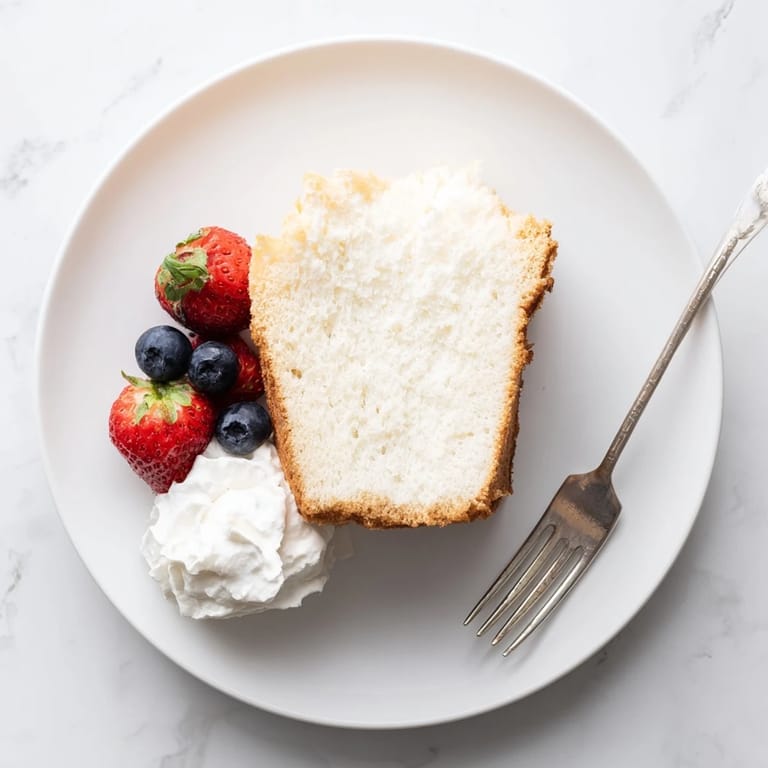
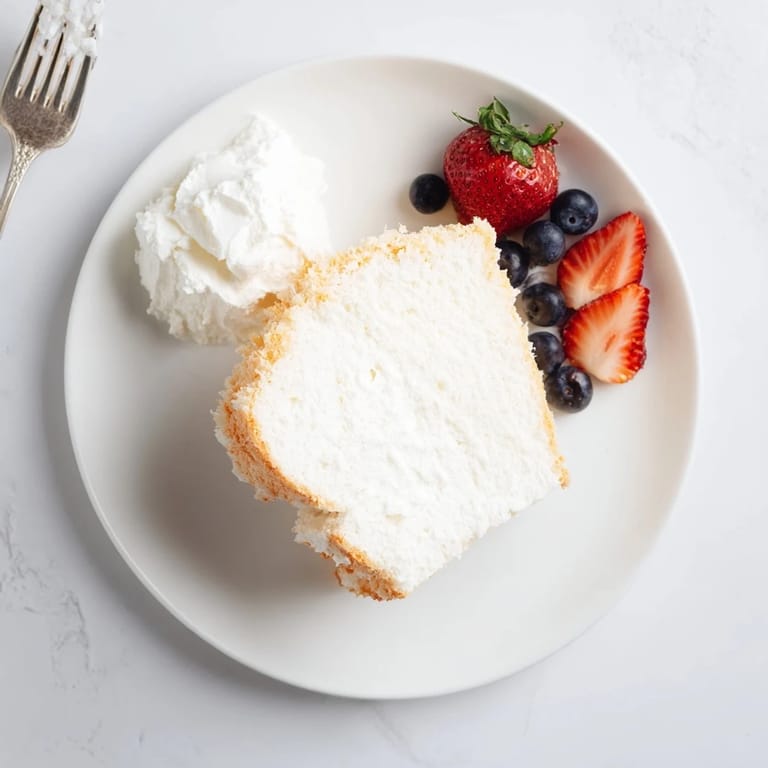
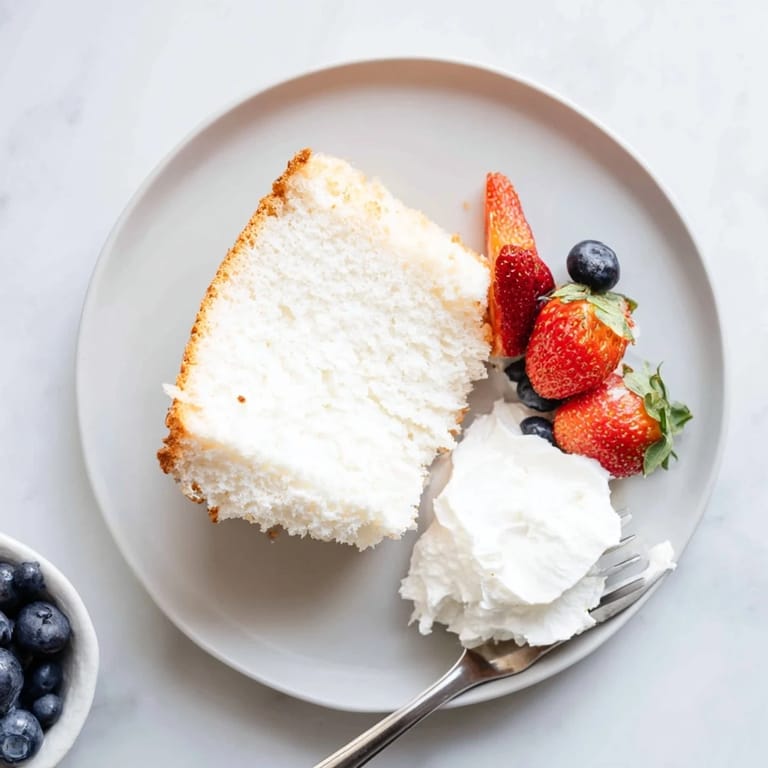
- Run a thin knife around the edges and center tube to loosen the cake. Invert onto a plate and serve plain, with fresh berries, or with a cloud of lightly sweetened whipped cream.
 Save
Save This recipe has become my go-to for summer birthdays, especially when served with macerated strawberries and a dollop of cream. Something about seeing that golden brown crown emerge from the oven feels like a small victory worth celebrating.
The Science of Sifting
That triple sifting step might seem excessive, but it is what separates a dense, rubbery cake from one that practically floats away. Each pass through the sifter adds more air and breaks up tiny flour lumps that would otherwise create heavy pockets in the finished cake.
Mastering the Fold
Folding is where most angel food cakes meet their demise. Think of it as gently burying treasure rather than stirring soup. Use the spatula to cut down through the middle, scrape along the bottom, and fold the mixture over itself, rotating the bowl slightly each time.
Serving Suggestions and Storage
This cake keeps remarkably well at room temperature for up to three days, covered loosely with a clean kitchen towel or inverted bowl. The texture actually improves slightly after the first day as the flavors settle and the crumb becomes even more tender.
- Toast leftover slices briefly and top with a scoop of vanilla ice cream
- Cube day-old cake and use it as a base for trifle or strawberry shortcake
- Wrap individual slices in plastic and freeze for up to two months
 Save
Save There is something profoundly satisfying about slicing into a cake you know defied gravity to become what it is. Every bite feels like a small miracle of chemistry and patience.
Questions & Answers
- → Why must the pan remain ungreased?
The batter needs to cling to the pan sides as it rises. Greasing would cause the cake to slip down during baking, resulting in a dense texture rather than the characteristic fluffy height.
- → Can I use all-purpose flour instead of cake flour?
Yes, though the texture will be slightly less delicate. For each cup of all-purpose flour, remove 2 tablespoons and replace with 2 tablespoons cornstarch to mimic cake flour's low protein content.
- → Why cool the cake upside down?
Inverting prevents the airy structure from collapsing under its own weight while cooling. The traditional tube pan design allows it to balance on a bottle or rack for proper support.
- → What causes the cake to become dense or chewy?
Overmixing when folding flour into egg whites, under-beating the whites, or using cold eggs can all compromise the texture. Ensure room temperature ingredients and gentle folding techniques.
- → How should I store leftovers?
Keep at room temperature under a dome or wrapped in plastic for up to 2 days. For longer storage, freeze individual slices in airtight containers for up to 3 months.