 Save
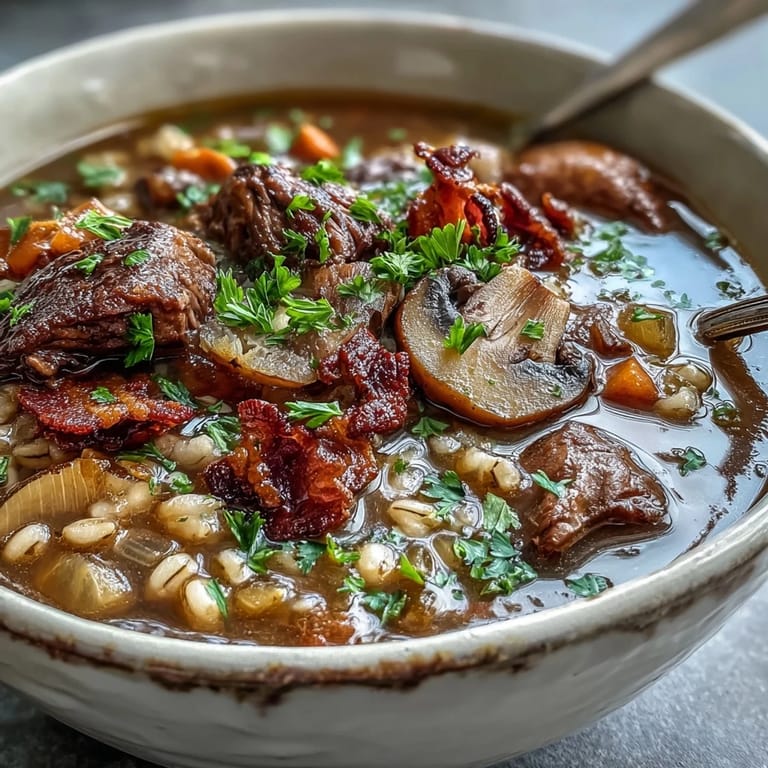
Save There's something about the sound of pancetta hitting a hot pot that signals the start of something serious in the kitchen. My neighbor stopped by on a gray November afternoon, and instead of small talk, we ended up building this soup together—watching the beef brown in batches, the kitchen filling with that deep, savory steam. By the time the barley had softened and the broth turned rich and golden, we both understood why this kind of cooking feels less like a chore and more like solving a puzzle. That's when beef and barley soup became the answer to nearly every cold evening.
I made this for my sister after she'd had a rough week, and she sat at my kitchen counter with a bowl in both hands like it was the warmest hug. The mushrooms had turned silky, the beef fell apart just looking at it, and the barley had this gentle, almost sweet nuttiness that grounded everything. She came back two days later asking if I had leftovers. Sometimes the best recipes are the ones that convince people you care.
Ingredients
- Beef chuck roast: This cut is built for long simmering—it has enough marbling to stay tender and flavorful, not tough or stringy like leaner cuts would turn.
- Pancetta: The smokiness here is non-negotiable; it gives the entire pot a savory backbone that regular broth simply cannot provide on its own.
- Baby bella mushrooms: They release their moisture and concentrate their earthiness as they cook, becoming meaty and rich—don't skip this step by using pre-sliced ones if you can help it.
- Pearl barley: Rinsing it first removes excess starch, so your soup stays clear and elegant rather than turning cloudy and gluey.
- Tomato paste: A small amount cooked down in the pan adds depth and a subtle sweetness that balances the savory elements beautifully.
- Bay leaves, thyme, rosemary: This trio creates that classic aromatics layer—dried herbs work better here than fresh because the long cook time lets them bloom fully into the broth.
- Beef broth: Low-sodium is essential because you control the final salt level, and it keeps the broth tasting clean rather than oversalted and one-dimensional.
Tired of Takeout? 🥡
Get 10 meals you can make faster than delivery arrives. Seriously.
One email. No spam. Unsubscribe anytime.
Instructions
- Brown the pancetta first:
- Let it render in the pot over medium-high heat until the edges curl and crisp. This takes about 3-4 minutes, and you'll know it's ready when the fat is shimmering and the smell makes you pause. Remove it with a slotted spoon so the rendered fat stays behind to flavor everything else.
- Sear the beef in batches:
- Don't overcrowd the pot—each cube needs contact with the hot surface to brown properly, which takes about 5-6 minutes per batch. You're not cooking the beef through; you're building flavor with that golden crust.
- Build the aromatic base:
- After the beef is out, use the leftover fat to soften your onions, carrots, and celery for about 5 minutes until they start to collapse. Add minced garlic for just one more minute, until your kitchen smells alive.
- Cook the mushrooms until they release their liquid:
- This takes 6-8 minutes and looks like they're sweating and then browning slightly at the edges. Stir occasionally so they cook evenly rather than steam.
- Bloom the tomato paste:
- Stir it in and let it sit for one minute in the hot pot—this deep-fries the paste slightly and mellows out any sharp, tinny flavors. It's a small step that makes a real difference.
- Combine everything and simmer:
- Return the beef and pancetta, add the barley and herbs, pour in the broth and water, and bring to a gentle boil. Then drop the heat to low, cover, and let it bubble softly for 1.5 hours, stirring every 20 minutes or so.
- Finish and taste:
- Remove the bay leaves and taste carefully before adding more salt—the broth will have concentrated and the barley will have absorbed flavors. A squeeze of freshness from that parsley garnish changes everything.
 Save
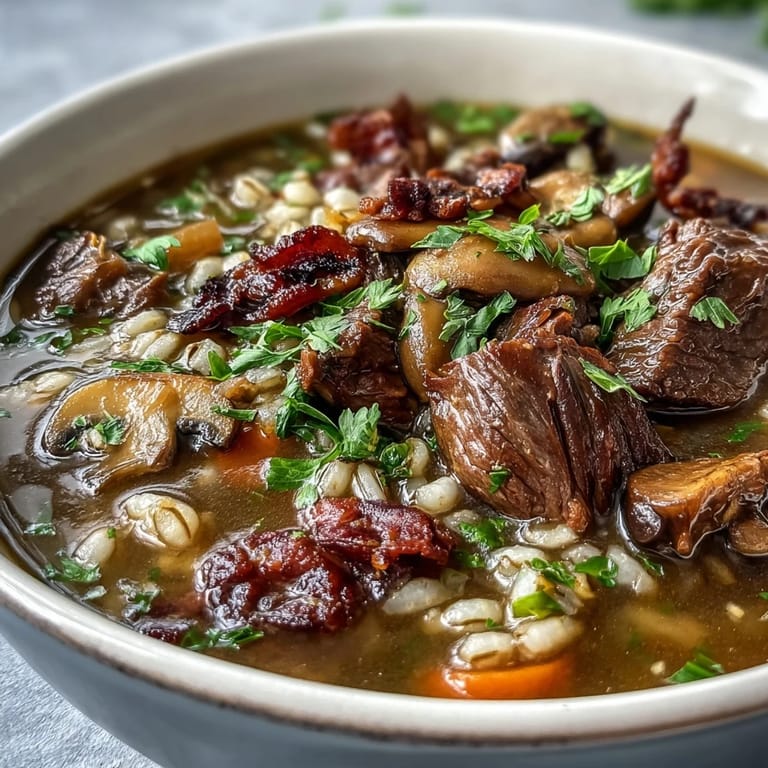
Save There's a moment toward the end of the cooking time when you lift the lid and the steam rises up, and you catch that exact aroma—beef and mushrooms and herbs all having a conversation—where you know something worth eating is happening. That's when you feel like a real cook, even if you just followed steps in a pot.
Why Barley Matters Here
Pearl barley is different from other grains in soups because it doesn't break down into mush; instead, it stays intact with a tender center and a slight chew, almost like pasta. It also absorbs the broth it simmers in, becoming nutty and slightly sweet, so you're eating both the grain and the flavor it's collected. Some people skip it for rice or use pasta instead, but then you're missing the whole reason this soup feels complete—that texture contrast between the soft beef, the silky mushrooms, and the grain that holds its shape.
The Pancetta Secret
Pancetta is the ingredient that stops people mid-spoon and makes them ask what you put in this. It's not the same as bacon, though you can substitute bacon in a pinch—pancetta is less smoky and more deeply pork-forward, cured with spices that add subtle layers. When you render it at the beginning, you're not just getting crispy bits; you're seasoning the entire pot with pork fat that becomes part of the broth's backbone. It's the difference between a soup that tastes good and a soup that tastes like someone who knows what they're doing made it.
Storage, Freezing & Make-Ahead Notes
This soup actually improves overnight as the flavors meld and the barley continues softening slightly—make it a day ahead if you have the foresight. It keeps in the refrigerator for four or five days, and freezes beautifully for up to three months in airtight containers, though the barley texture changes slightly when frozen and thawed.
- Cool the soup completely before storing, or it will steam itself soggy in the container.
- If the soup thickens too much after a day or two, stir in extra broth or water until it reaches your preferred consistency.
- Reheat gently on the stovetop over low heat rather than microwaving, which can make the barley tough.
 Save
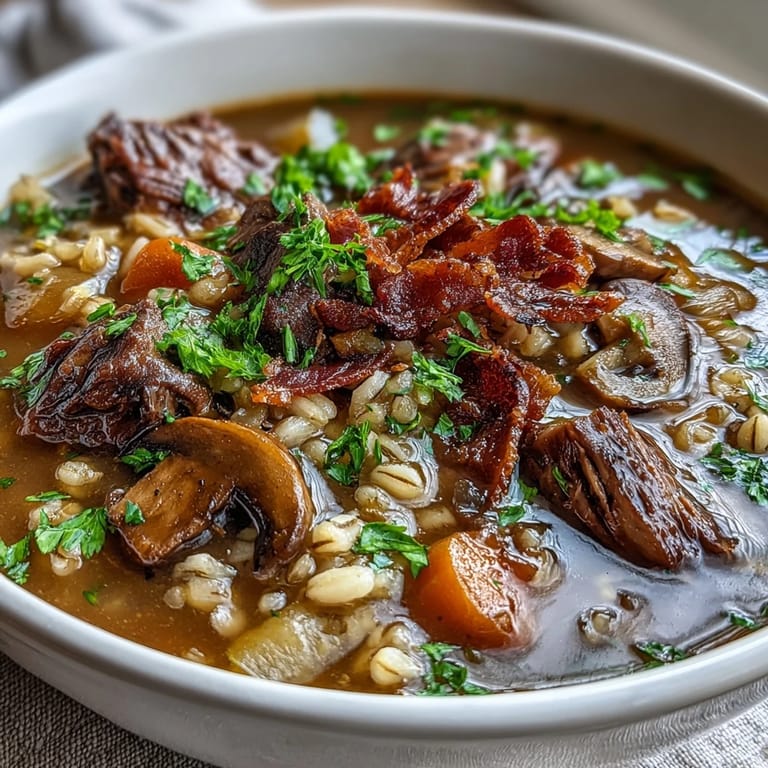
Save Beef and barley soup is the kind of dish that turns a regular evening into something worth remembering, usually without you planning for it to be that special. Make it, share it, and let the kitchen do the talking for you.
Questions & Answers
- → Can I make this soup ahead of time?
Yes, this soup is excellent for meal prep. The flavors actually improve after a day in the refrigerator. Store in an airtight container for up to 4 days. Note that the barley may absorb more liquid as it sits, so you may need to add extra broth when reheating.
- → What cut of beef works best for this soup?
Beef chuck roast is ideal because it becomes incredibly tender during the long simmering process. The marbling in chuck roast adds richness to the broth. You can also use beef stew meat, but ensure it's cut into uniform 1/2-inch cubes for even cooking.
- → Can I substitute the pancetta with another ingredient?
Absolutely. Bacon is the most common substitute and works wonderfully. You can also use diced ham or prosciutto. For a leaner option, omit the pancetta entirely and add an extra tablespoon of olive oil for sautéing.
- → How can I make this soup gluten-free?
Replace the pearl barley with a gluten-free grain such as brown rice, wild rice, or quinoa. Keep in mind that cooking times will vary—brown rice takes about 45 minutes, while quinoa only needs 15-20 minutes. Also verify your beef broth is certified gluten-free.
- → Why does the soup need to simmer for so long?
The extended simmering time serves two purposes: it breaks down the connective tissue in the beef chuck, making it fork-tender, and allows the barley to fully cook and release its starches, which naturally thickens the broth and creates a satisfying, hearty consistency.
- → What type of mushrooms should I use?
Baby bella mushrooms (cremini) are recommended for their meaty texture and earthy flavor. However, you can use white button mushrooms for a milder taste, or mix in shiitake or porcini mushrooms for deeper umami notes and complexity.