 Save
Save My kitchen got quiet the night I decided pizza needed reinvention. I'd been staring at a head of broccoli, leftovers from meal prep, wondering if I could stop eating the same salads and actually enjoy something that felt indulgent. That's when it hit—what if the crust itself became the vegetable? The first attempt was clumsy, the mixture too wet, but something shifted when I pulled that golden, crispy base from the oven. It tasted nothing like sacrifice and everything like discovering a secret.
My partner came home to find me arranging cherry tomato halves with the focus of someone doing surgery. When I finally slid the finished pizza in front of him, he went quiet for a moment—the best kind of quiet. He asked for seconds before finishing his first slice, and I realized this wasn't just a low-carb workaround anymore; it had become the thing I'd make when I wanted to feel smart and satisfied at the same time.
Ingredients
- Cooked broccoli florets, finely chopped: This is your structural hero, adding fiber and earthiness while keeping carbs minimal; pulsing in a food processor creates a consistent texture that binds beautifully.
- Cooked chicken breast, finely shredded: Leftover rotisserie chicken works perfectly and adds protein that keeps you full; the finer you shred it, the more it weaves into a cohesive crust.
- Large egg: This acts as your binding agent, so don't skip it or substitute with aquafaba unless you want a crumbly disaster.
- Shredded mozzarella cheese for the crust: Use whole milk mozzarella if possible; part-skim can make the crust slightly more fragile.
- Grated Parmesan cheese: Its sharpness anchors the mild broccoli and chicken, and it helps create that crispy golden edge.
- Dried oregano and garlic powder: These prevent the crust from tasting one-dimensional and remind your palate you're eating pizza, not a vegetable bake.
- Salt and black pepper: Don't be shy here; the crust needs seasoning since there's no bread to carry flavor.
- Sugar-free tomato sauce or pizza sauce: Regular sauce works too if you're not tracking carbs; spread it thin to avoid sogginess.
- Mozzarella cheese for topping: Fresh or low-moisture both work, though low-moisture browns more evenly.
- Red onion, bell pepper, cherry tomatoes, black olives, and baby spinach: These create color and texture; feel free to swap for mushrooms, artichoke hearts, or zucchini based on what's in your crisper drawer.
Tired of Takeout? 🥡
Get 10 meals you can make faster than delivery arrives. Seriously.
One email. No spam. Unsubscribe anytime.
Instructions
- Heat your oven and prep your stage:
- Set the oven to 425°F and line a baking sheet or pizza stone with parchment paper. This temperature is hot enough to set the crust quickly without burning it, and parchment prevents sticking without changing the texture.
- Build your crust foundation:
- In a large bowl, combine the chopped broccoli, shredded chicken, egg, mozzarella, Parmesan, oregano, garlic powder, salt, and pepper. Mix with your hands until everything is evenly distributed and the mixture feels cohesive; it should hold together but still feel slightly sticky. This texture tells you the egg and cheese are doing their job.
- Shape with confidence:
- Transfer the mixture onto your prepared baking sheet and spread it into a 12-inch round or oval, about ½ inch thick. Use damp hands if it sticks; the moisture helps you shape without tearing. Don't worry about perfection—rustic pizza crusts have more character anyway.
- Bake the base until golden:
- Bake for 20 minutes until the edges are golden brown and the top feels firm when you press it gently. You'll notice the kitchen fill with a savory, toasted aroma; that's when you know it's getting crispy.
- Layer your toppings with care:
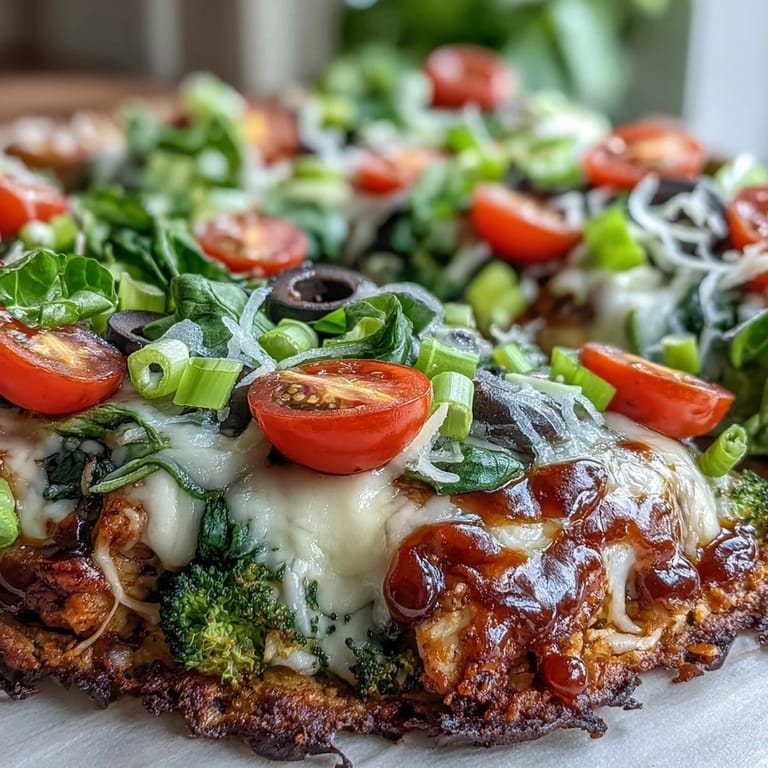
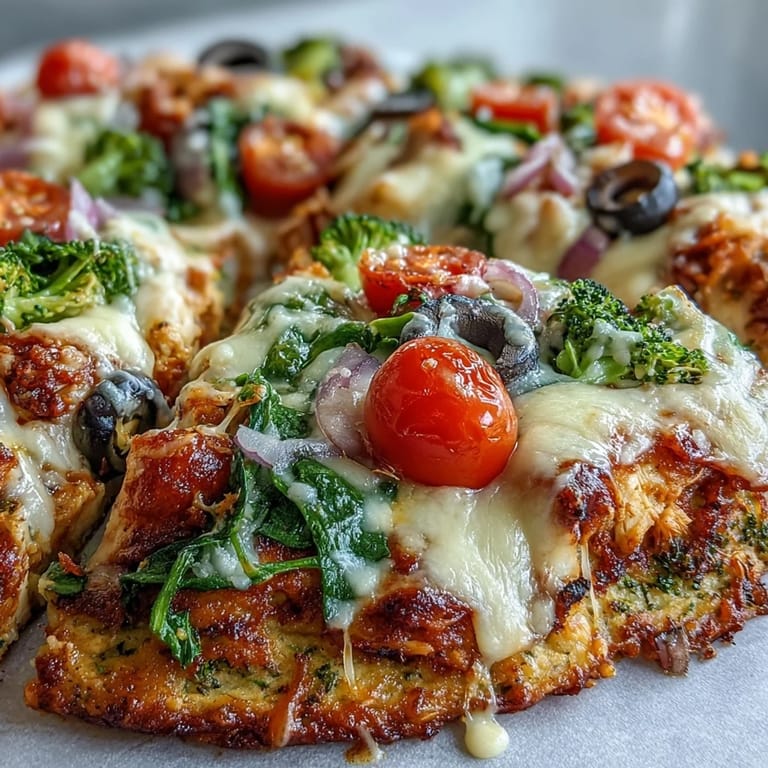
- Pull the crust from the oven and spread tomato sauce evenly across the surface, leaving a small border. Sprinkle the mozzarella cheese first, then arrange your vegetables and olives in whatever pattern makes you happy. This order ensures the cheese acts as a barrier between the sauce and crust, keeping it from becoming soggy.
- Season and finish baking:
- Dust with dried Italian herbs and return to the oven for 8 to 10 minutes until the cheese bubbles and starts to brown. The final bake is where everything melds together and the vegetables soften just enough to release their flavors.
- Rest and garnish:
- Let the pizza cool for a few minutes—this allows the cheese to set slightly so slices hold together. Top with chili flakes and fresh basil if you want brightness and heat to cut through the richness.
 Save
Save There's a moment when you bite into a slice and the flavors suddenly make sense—the crispy, savory crust giving way to melted cheese and bright vegetables. That's when food stops being about macros and becomes about joy. This pizza gave me that moment, and now it's something I make when I want to prove to myself that healthy eating doesn't mean boring.
The Secret to a Crispy Crust
The key lies in two separate baking phases. The first 20 minutes, when the crust bakes alone, allows all the moisture to evaporate and the proteins to set. If you skipped this and topped everything at once, you'd end up with a dense, almost rubbery texture. I learned this the hard way by trying to speed things up; that pizza was edible but unmemorable. Now I guard those 20 minutes fiercely because they're what makes the difference between a health-conscious experiment and something you'd actually crave.
Customizing Your Toppings Without Losing Balance
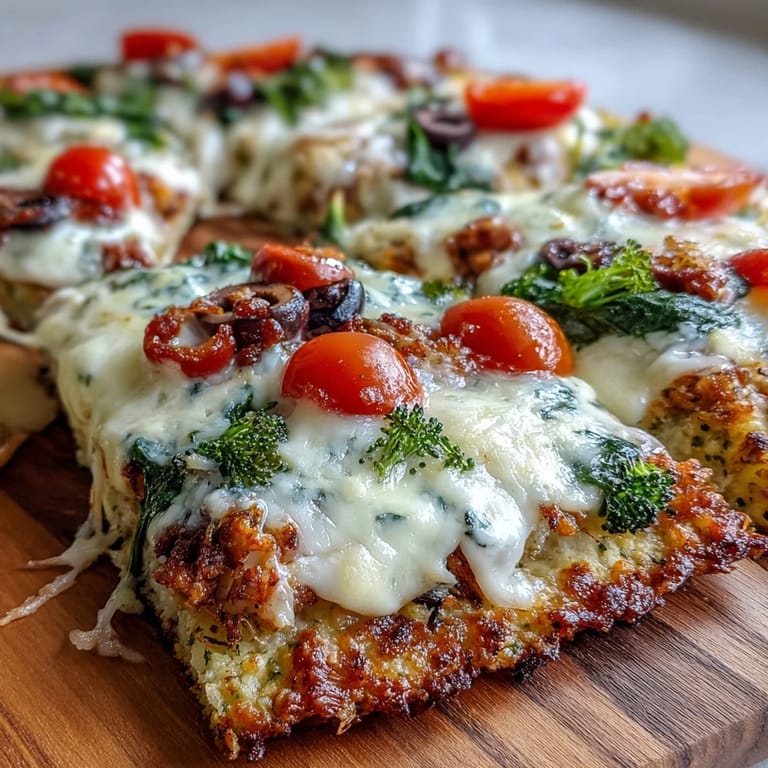
The beauty of this pizza is how forgiving it is with substitutions. Mushrooms, artichoke hearts, caramelized onions, grilled zucchini—all work beautifully. The structure of the crust is sturdy enough to handle heavier toppings like sun-dried tomatoes or crumbled sausage if you want something richer. I've experimented with fresh arugula scattered on top just before serving, which adds a peppery bite that wakes up the whole plate. The only rule I follow is keeping wet vegetables to a minimum; that means patting mushrooms dry and not overloading with sauce.
Making It Work for Everyone at Your Table
The first time I made this, I wasn't sure how to describe it to friends who didn't care about low-carb living. I just put a slice on their plate and let the taste speak for itself. Since then, I've learned this pizza appeals to people regardless of dietary goals because it's genuinely flavorful and satisfying. For a dairy-free version, swap the cheeses for quality vegan alternatives; they don't melt quite as beautifully, but they work. Vegetarians can easily skip the chicken and add extra spinach or mushrooms instead.
- Store leftovers in an airtight container in the fridge for up to two days and reheat in a 350°F oven for five minutes to restore crispness.
- You can make the crust a day ahead, cover it with plastic wrap, and refrigerate; just add a couple of minutes to the final bake time.
- This pizza freezes well if you wrap individual slices tightly; thaw slightly before reheating so the crust doesn't crack.
 Save
Save Making this pizza taught me that healthy eating becomes sustainable only when it tastes good enough that you genuinely want it. That's the real win here.
Questions & Answers
- → Is the broccoli chicken crust sturdy enough to hold toppings?
Yes, the combination of finely chopped broccoli, shredded chicken, egg, and cheeses creates a firm, cohesive crust that bakes into a solid base capable of supporting all your favorite toppings without falling apart.
- → Can I make the crust ahead of time?
You can prepare the crust mixture and shape it, then refrigerate for up to 24 hours before baking. Alternatively, bake the crust completely, cool, and store in the refrigerator for 2-3 days before adding toppings and reheating.
- → What vegetables work best as toppings?
Bell peppers, red onions, cherry tomatoes, spinach, olives, mushrooms, artichoke hearts, and grilled zucchini all pair beautifully. Choose vegetables that cook quickly and won't release excessive moisture.
- → How do I prevent the crust from getting soggy?
Pre-baking the crust for 20 minutes until firm and golden is essential. Also, pat vegetables dry before topping and avoid overly watery sauces. Letting the pizza cool for a few minutes before slicing helps maintain texture.
- → Can I freeze leftovers?
While possible, freezing may affect the crust's texture. For best results, refrigerate leftovers for up to 2 days and reheat in the oven at 350°F until heated through and crisp again.
- → Is this suitable for meal prep?
Absolutely. You can batch-cook several crusts, bake them fully, then freeze individually wrapped. When ready to eat, add your toppings and bake until heated through and cheese melts.