 Save
Save There's something about the smell of onions turning golden that stops time in a kitchen. Years ago, I watched a chef in Lyon spend forty minutes just stirring a pot, and I thought she was wasting time until I tasted what emerged—caramelized sweetness so deep it tasted like it held every autumn I'd ever known. That first spoonful of French onion soup taught me that patience isn't boring, it's where flavor lives. Now, whenever I make this, I think of her steady hand and the way she never rushed.
I made this for my neighbor during the first real cold snap of the year, and she sat at my kitchen counter with a bowl, not saying much, just eating slowly. When she finished, she asked if I could teach her, and we ended up making it together the next week. That soup became our winter tradition, a quiet ritual that said more than words ever could.
Ingredients
- Yellow onions: Four large ones, sliced thin—they're the backbone of this soup, and their natural sugars caramelize into deep complexity over time.
- Leeks: Use the white and light green parts only, cleaned thoroughly between layers where dirt hides, and slice them to match the onion thickness for even cooking.
- Shallots: Three of them add a subtle sweetness and sophistication that onions alone can't quite reach.
- Garlic: Three minced cloves, added late so they don't burn and turn bitter during the long caramelization.
- Unsalted butter and olive oil: Together they create a golden cooking medium that won't scorch, and the combination matters more than you'd think.
- Beef broth: High-quality matters here because it's the canvas—cheap broth tastes thin and one-dimensional no matter what you add to it.
- Worcestershire and soy sauce: These are your umami secret, adding depth that makes people ask what spice you used.
- Dry white wine: The acidity cuts through richness and lifts the whole soup toward brightness.
- Fresh thyme and bay leaf: Herbaceous anchors that ground the sweetness of caramelized onions in earthiness.
- Baguette: Sliced and toasted until it's crisp enough to hold up to hot soup without immediately disintegrating.
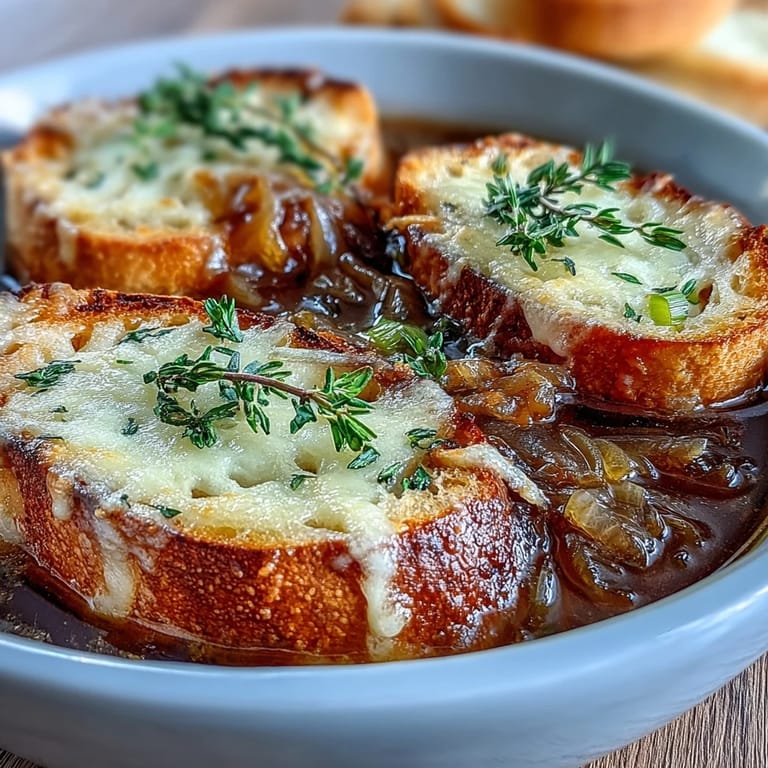
- Gruyère cheese: Aged and nutty, it melts into creamy pockets throughout the bread, transforming it into something molten and essential.
Tired of Takeout? 🥡
Get 10 meals you can make faster than delivery arrives. Seriously.
One email. No spam. Unsubscribe anytime.
Instructions
- Start with heat and patience:
- Melt butter with olive oil in your heaviest pot over medium heat—heavy bottoms prevent scorching during the long caramelization ahead. The oil raises the smoke point, which matters because you're cooking low and slow, not fast and hot.
- Caramelize the alliums:
- Add onions, leeks, and shallots all at once and stir frequently, letting them soften and turn golden brown over 35 to 40 minutes—this is where the magic happens, and rushing ruins everything. You'll know they're ready when they're a deep amber color and smell sweet enough to eat alone.
- Build the aromatics:
- Stir in minced garlic and cook just 2 minutes more, enough time for the raw bite to disappear but not long enough for it to brown and turn acrid.
- Deglaze and lift:
- Pour in white wine and scrape the bottom of the pot with a wooden spoon, gathering all those caramelized bits that hold incredible flavor. The wine's acidity dissolves them back into liquid form where you can taste them.
- Build the broth base:
- Add beef broth, Worcestershire sauce, soy sauce, thyme, and bay leaf, then bring to a simmer and reduce heat low. Cook uncovered for 30 minutes, letting flavors meld and deepen.
- Taste and season:
- Remove the bay leaf and season carefully with salt and pepper—remember the broth likely already has salt, so add gradually and taste as you go. This moment determines whether the soup sings or falls flat.
- Toast the bread:
- Preheat your broiler and arrange baguette slices on a baking sheet, toasting under direct heat until golden and crisp, about 1 to 2 minutes per side. Watch carefully because bread scorches quickly.
- Assemble the bowls:
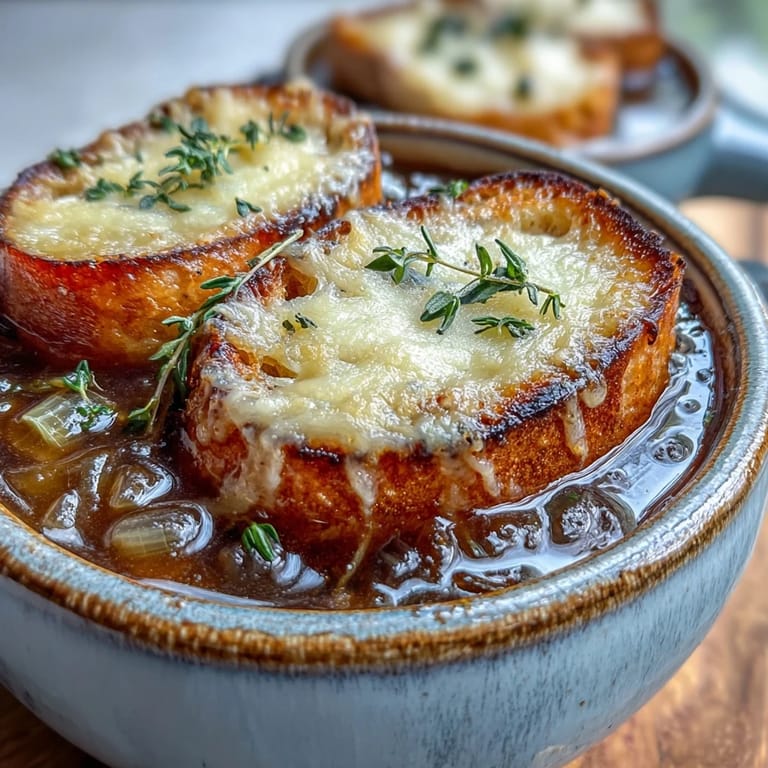
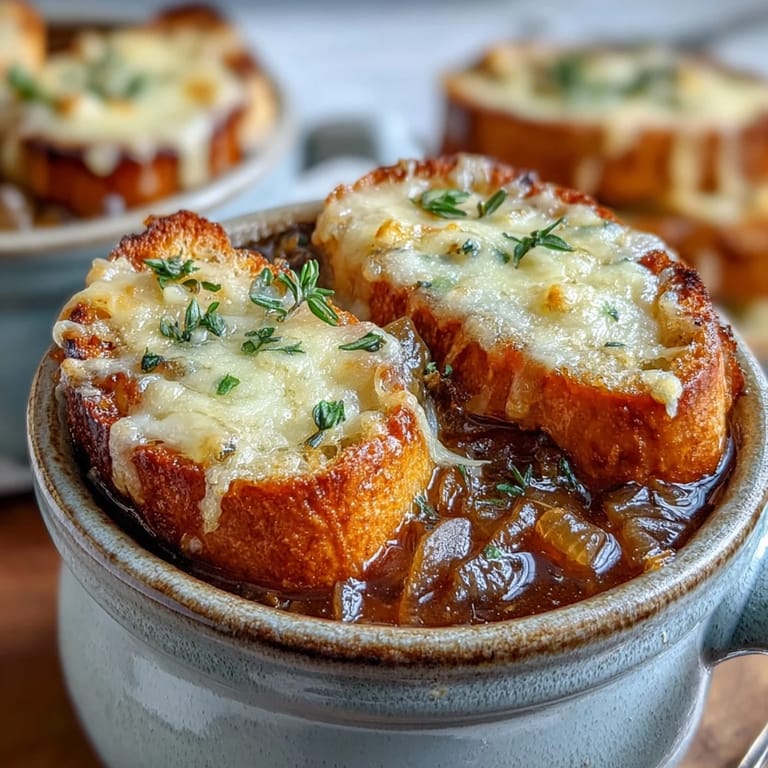
- Ladle hot soup into oven-safe bowls, top each with toasted baguette slices, then pile on generous handfuls of grated Gruyère—don't be shy here, the cheese is essential, not optional.
- Final melt:
- Place bowls under the broiler until cheese bubbles and turns golden at the edges, 3 to 5 minutes—listen for the sound to change slightly, a gentle hiss indicating the cheese has reached the perfect temperature.
- Serve with intention:
- Bring bowls directly to the table while still steaming, warning everyone that the bowls themselves are hot enough to burn fingers and the cheese inside is hotter still.
 Save
Save  Save
Save I once burned the roof of my mouth so badly on the first spoonful that I couldn't taste anything for three days, and somehow that made the memory sweeter instead of worse. It became a funny story about not having patience, which is ironic given how much patience the soup itself requires.
The Science of Caramelization
What happens during those 40 minutes isn't just cooking—it's chemistry. Onions contain natural sugars and amino acids that react together under low, steady heat, creating hundreds of new flavor compounds that didn't exist before. This is called the Maillard reaction, and it's the same process that makes bread crust smell amazing and creates that depth in everything from beef stews to roasted vegetables. Understanding this helped me stop seeing caramelization as wasted time and start seeing it as transformation, which changes everything about your patience in the kitchen.
Making It Vegetarian
Vegetarian French onion soup isn't a compromise or a downgrade—it's a different but equally valid expression of the same idea. The secret is using the best vegetable broth you can find or making your own, and then compensating for the lack of beef with umami from soy sauce and an extra touch of Worcestershire if you can verify it's vegetarian-friendly. Some cooks add a splash of balsamic vinegar or sherry for additional depth, and others swear by a pinch of smoked paprika to echo some of what beef would provide. The soup becomes lighter but no less satisfying.
Timing and Make-Ahead Strategy
This soup becomes exponentially better when made a day or two ahead, which is one of its greatest gifts for anyone with a busy life. Make the soup through the seasoning step, cool it completely, then refrigerate it in an airtight container for up to three days. When you're ready to serve, reheat gently on the stovetop, then proceed with toasting the bread and broiling the cheese-topped bowls.
- You can even prepare the baguette slices and cheese ahead, then assemble just before serving if time is tight.
- The soup freezes beautifully for up to two months, though the broth texture may shift slightly upon thawing.
- Never freeze the soup already topped with cheese and bread—always assemble that last step after reheating.
 Save
Save 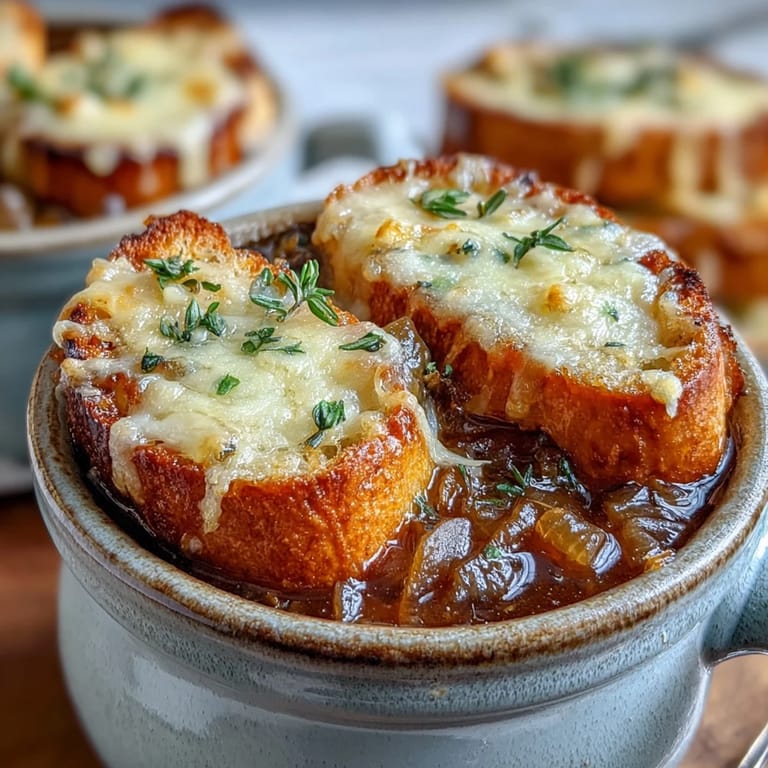 Save
Save French onion soup is one of those rare dishes that tastes like it took hours and hours, yet asks so little in return except time and attention. Make it for someone you love, and watch how something this simple becomes a quiet act of care.
Questions & Answers
- → How long does it take to properly caramelize the onions?
Plan for 35-40 minutes of slow cooking over medium heat, stirring frequently. This patience is essential for developing the deep, sweet flavor that makes this soup authentic. Rushing this step will result in a less flavorful dish.
- → Can I make this soup vegetarian?
Yes, substitute high-quality vegetable broth for beef broth and use a vegetarian Worcestershire sauce alternative or omit it entirely. The caramelized onions and umami ingredients like soy sauce still provide rich, savory depth.
- → What cheese works best if I can't find Gruyère?
Swiss cheese or Emmental are excellent substitutes with similar melting properties and nutty flavor. You can also use a combination of mozzarella for meltability and Parmesan for flavor.
- → Can I prepare this soup ahead of time?
Absolutely. The soup base can be made up to 3 days in advance and refrigerated. In fact, the flavors often deepen overnight. When ready to serve, reheat the soup, then add the bread and cheese topping and broil.
- → Why add soy sauce to French onion soup?
Soy sauce adds umami depth and enhances the savory quality of the broth without making it taste Asian. It's a chef's trick for boosting flavor complexity in many Western dishes.
- → Do I need oven-safe bowls?
Yes, traditional French onion soup is finished under the broiler to melt and bubble the cheese. Use ceramic crocks or oven-safe bowls that can withstand high heat. Alternatively, broil the cheese-topped bread separately and place on top of the soup.