 Save
Save There's something about the smell of roasted butternut squash that fills your kitchen with the promise of autumn, even if it's nowhere near fall. I discovered this soup on a random Tuesday when the weather turned unpredictably chilly and I had a giant squash sitting on my counter, practically begging to be turned into something warm. The first spoonful was pure comfort—velvety, naturally sweet, with just enough spice to remind you that you're eating something real. Now whenever I need to slow down and actually taste what I'm making, this is what lands in my pot.
My sister showed up unannounced one October evening, and I threw together this soup while we caught up over wine. By the time she left, she'd asked for the recipe three times and finished her bowl like she hadn't eaten in days. That's when I realized this isn't just soup—it's the kind of dish that makes people feel genuinely taken care of.
Ingredients
- 1 large butternut squash (about 2 lbs), peeled, seeded, and cubed: The star of the show—roasting transforms it into something golden and sweet, so don't skip that step or use it raw.
- 1 medium yellow onion, chopped: Adds depth and a slight sweetness that balances the earthiness of the squash.
- 2 garlic cloves, peeled: Just enough to whisper in the background without overpowering everything else.
- 1 medium carrot, peeled and chopped: Brings a subtle sweetness and helps round out the vegetable profile.
- 4 cups vegetable broth (gluten-free, if needed): Use something you actually like drinking—it matters more than you think since there's nothing to hide behind.
- 2 tbsp olive oil: Coats the vegetables before roasting and helps them caramelize beautifully.
- 1 tsp salt: Hold back a pinch for the end so you can taste as you go and adjust properly.
- 1/2 tsp black pepper: Freshly ground is worth the extra second of effort.
- 1/2 tsp ground nutmeg: This spice is what makes people ask what's in the soup—don't leave it out.
- 1/4 tsp cayenne pepper (optional): A tiny pinch if you want a whisper of heat without making it spicy.
- 1/4 cup heavy cream or coconut cream (optional): Swirl this in at the end if you want richness, or skip it entirely—the soup stands on its own.
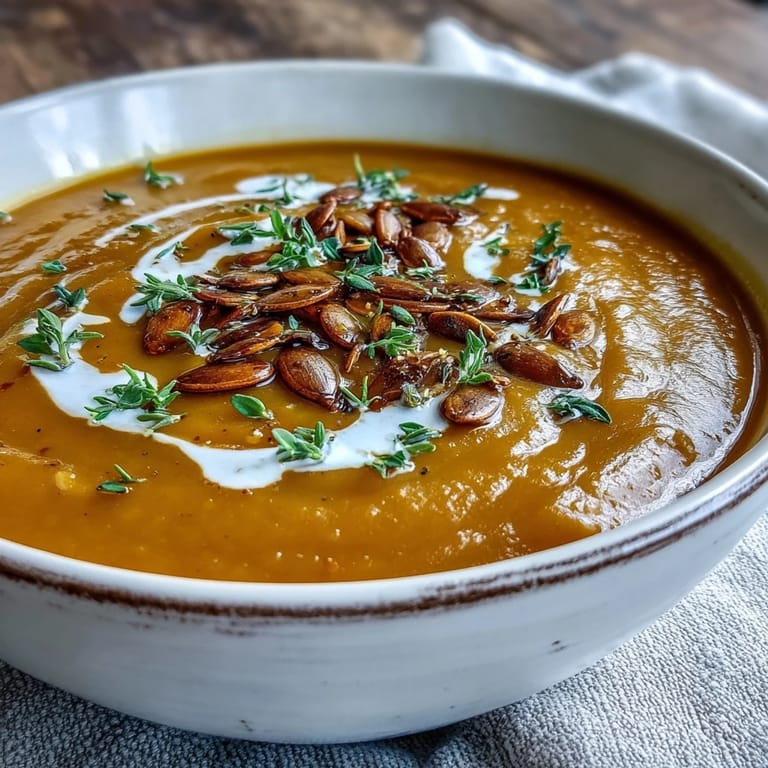
- Toasted pumpkin seeds and fresh thyme (optional garnish): These finish the soup with texture and a visual reminder that you actually cared about presentation.
Tired of Takeout? 🥡
Get 10 meals you can make faster than delivery arrives. Seriously.
One email. No spam. Unsubscribe anytime.
Instructions
- Heat your oven and prep the vegetables:
- Set your oven to 400°F and while it warms up, cut your squash in half, scoop out the seeds with a sturdy spoon, then peel and chop everything into roughly 1-inch cubes so they roast evenly. The pieces don't have to be perfect—just consistent.
- Get them golden and caramelized:
- Toss your squash, onion, garlic, and carrot with olive oil on a baking sheet, spread them out in a single layer, and roast for 30 to 35 minutes. Stir them halfway through so nothing sticks, and you're looking for caramelized edges and a fork-tender texture.
- Bring it all together:
- Pour the roasted vegetables into a pot, add your broth along with the salt, pepper, nutmeg, and cayenne if you're using it. Bring it to a simmer over medium heat and let it bubble gently for about 10 minutes so the flavors actually get to know each other.
- Make it smooth and silky:
- Use an immersion blender right in the pot, moving it around so you catch everything, until the soup is completely velvety. If you're using a regular blender, work in batches and be careful with hot liquid—pour it slowly and don't overfill.
- Taste and adjust:
- This is the moment that matters—taste a spoonful and decide if you need more salt, more spice, or anything else. Swirl in cream if you want, but honestly, the soup is already rich from the roasted vegetables.
- Serve it warm:
- Ladle it into bowls and finish with a sprinkle of toasted pumpkin seeds and a tiny leaf of fresh thyme. The warmth brings out all the flavors perfectly.
 Save
Save I made this soup for my neighbor when she came home from the hospital, and I'll never forget how she sat at her kitchen counter with the bowl warming her hands, just breathing in the smell before she even took a bite. Sometimes food isn't really about nutrition—it's about showing up for someone in a way that feels tangible and warm.
Why Roasting Changes Everything
The magic of this soup lives entirely in that roasting step. When butternut squash sits in the oven, something chemical happens—the natural sugars caramelize, the edges turn deep golden, and the whole vegetable develops a richness you simply cannot get by boiling. I learned this the hard way by trying to shortcut the recipe once, dumping raw squash straight into broth, and ending up with something that tasted thin and one-dimensional. Never again.
Making It Your Own
The beauty of this recipe is how flexible it actually is without falling apart. I've added a small apple to the roasting tray when I wanted subtle sweetness, thrown in fresh sage instead of thyme when that's what I had, and even stirred in a splash of balsamic vinegar once when I was feeling experimental. The base is forgiving enough to handle little variations, so don't be afraid to play around once you've made it the classic way at least once.
Serving Suggestions and Storage
This soup tastes even better the next day because the flavors have time to settle and deepen, making it perfect for meal prep or batch cooking on a Sunday afternoon. It keeps in the refrigerator for about four days, or you can freeze it in portions and reheat gently whenever you need comfort in a bowl. Pair it with crusty bread, grilled cheese, or a simple salad—whatever feels right for the moment.
- For a vegan version, swap the heavy cream for coconut cream and make sure your broth is certified dairy-free.
- If you're short on time, you can use pre-cut butternut squash from the grocery store, though roasting takes slightly longer.
- Toast your own pumpkin seeds in a dry pan for five minutes if you want them extra crispy and flavorful.
 Save
Save This soup has become my go-to when I need to remember why I love cooking in the first place. It's honest, nourishing, and it fills your kitchen with a smell that makes everyone ask what you're making.
Questions & Answers
- → Can I make this soup ahead of time?
Yes, this soup stores beautifully in the refrigerator for up to 5 days and freezes well for up to 3 months. Reheat gently on the stovetop, adding a splash of broth if needed to adjust consistency.
- → How do I make this soup vegan?
Simply substitute coconut cream for the heavy cream, or omit the cream entirely. Ensure your vegetable broth is vegan-certified, and the soup will be completely plant-based.
- → Can I use pre-cut butternut squash?
Absolutely. Pre-cut squash saves significant prep time. Just ensure the pieces are similar in size for even roasting, and adjust roasting time if the cubes are smaller than usual.
- → What can I substitute for butternut squash?
Other winter squashes work wonderfully, including acorn squash, kabocha, or even sweet potatoes. Cooking times may vary slightly depending on the vegetable's density.
- → Why is roasting important for this soup?
Roasting caramelizes the natural sugars in the squash and vegetables, creating deeper, more complex flavors compared to simply boiling. This step is key to achieving the soup's rich, sweet taste.
- → How can I adjust the consistency?
For a thinner soup, add more vegetable broth during blending. For a thicker consistency, use less broth or add a small amount of pureed white beans for extra body and protein.